Hull Parts
The hull is the main body of a vessel. It provides buoyancy and protects the interior from water. The hull design affects the yacht’s speed, stability, and maneuverability.

The hull is the main body of a vessel. It provides buoyancy and protects the interior from water. The hull design affects the yacht’s speed, stability, and maneuverability.

Hand in the “С” handshape, palm down, turned diagonally to the left in the horizontal plane, with the hand placed near the torso at stomach level. The hand rises to chest level, then turns in an arc from left to right in the horizontal plane. Finally, it lowers back to stomach level.
The main body of a vessel, providing buoyancy and watertightness.
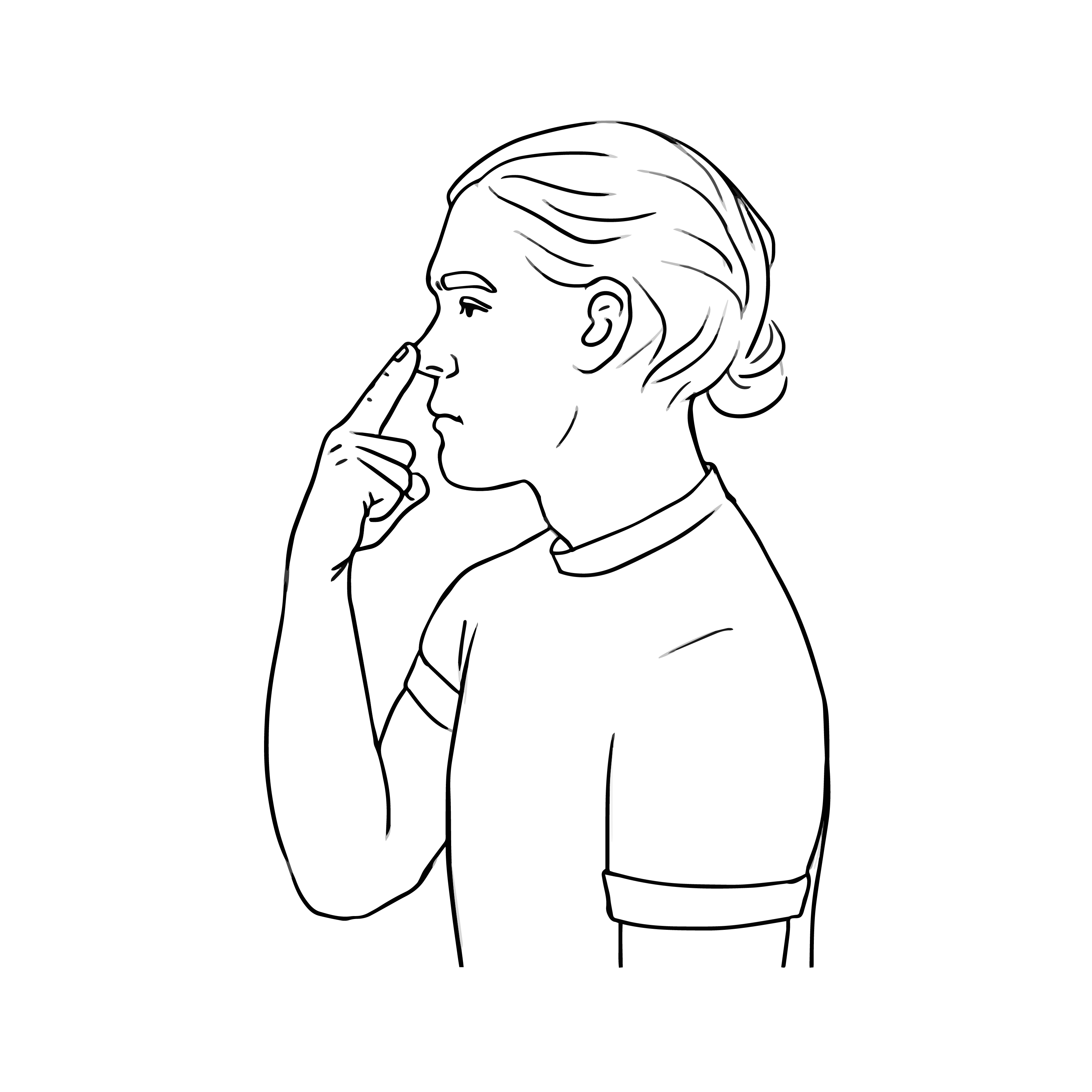
Hand in the “1” handshape touches the nose twice with the fingertip.
The front part of the hull.
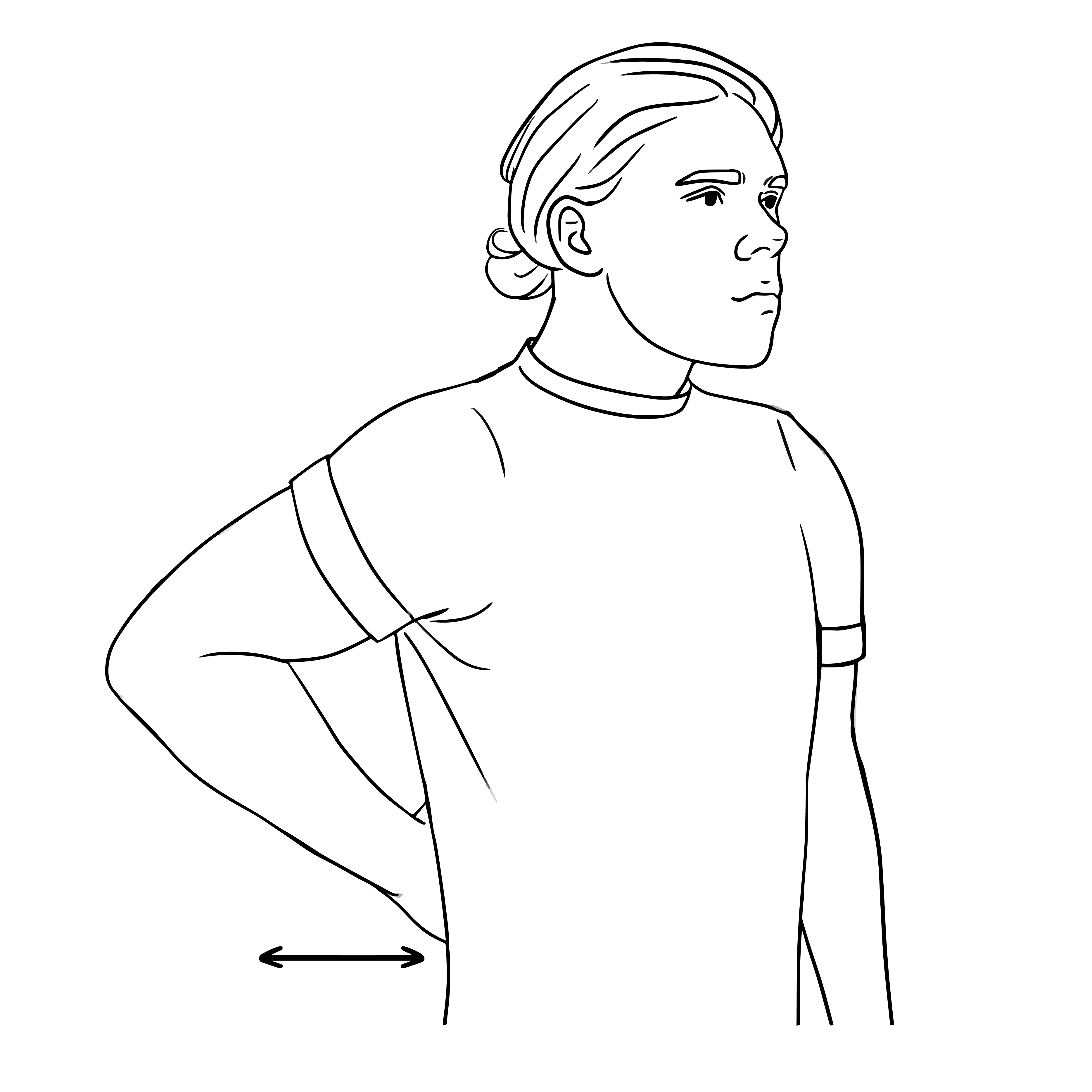
Hand in the “В” handshape, palm placed on the lower back, fingertips pointing downward. A repeated patting movement is made on the lower back.
The rear part of the hull.

RIGHT: Hand in the “В” handshape, fingers placed on the shoulder joint of the right arm. A repeated patting movement is made with the fingertips on the right shoulder joint. SIDE: Hand in the “В” handshape, palm on the thigh, fingertips pointing downward. A repeated patting movement is made on the thigh.
One side of the vessel’s hull.

LEFT: Hand in the “В” handshape, palm on the shoulder joint of the left arm. A repeated patting movement is made with the fingertips on the left shoulder joint. SIDE: Hand in the “В” handshape, palm on the thigh, fingertips pointing downward. A repeated patting movement is made on the thigh.
One side of the vessel’s hull.

Hand in the “В” handshape, fingertips pointing downward, the hand turned edgewise toward the signer and placed near the chest. Movement downward to hip level.
A heavy fin under the hull that provides stability and resists leeway.

Hand in the “В” handshape, arm straight and extended in front of the signer, fingertips pointing downward, the hand turned edgewise toward the signer. The palm first turns toward the signer and then returns to its initial position.
A fin beneath the hull that controls the vessel’s course.
A general name for the structures used to set the sails: to hoist them, stretch them, and hold them in their working position.

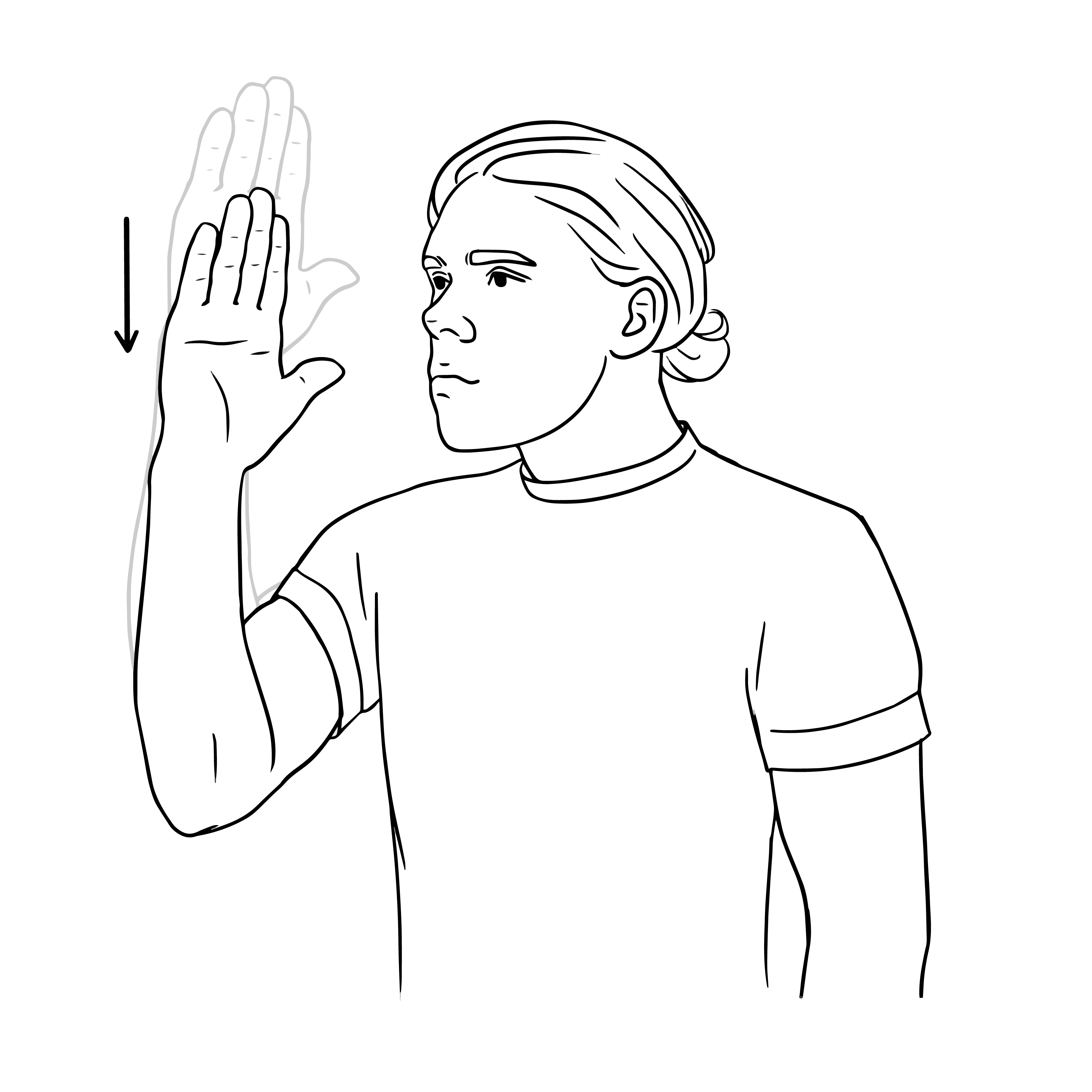
Hand in the “В” handshape, forearm vertical, hand turned edgewise away from the signer, fingertips positioned beside the upper part of the forehead. The forearm moves downward in a vertical plane. In the final position, the fingertips are beside the lower part of the forehead.
A vertical structure that supports the sails and rigging.

Hand in the “С” handshape, palm facing away from the signer, positioned near the left shoulder. Horizontal movement from left to right, with the fingertips continuously pointing away from the signer. In the final position, the hand is near the right shoulder.
A horizontal spar attached to the mast to which the foot of the mainsail is fastened.

Hand in a slightly open “Ж” handshape: the thumb is slightly lowered and separated from the other fingers, palm facing away from the signer. The hand is positioned to the left of the upper forehead. It then moves horizontally from left to right, with the fingertips still pointing away from the signer. In the final position, the hand is slightly beyond the upper right side of the forehead.
Horizontal struts on the mast that push the shrouds outboard and help control mast bend.

Hand in the “1” handshape, palm facing down, fingertip pointing straight away from the signer. The hand is placed near the signer’s nose. Movement forward, away from the body.
A retractable or fixed spar at the bow of the yacht used to carry a gennaker or other headsails.

Hand in the “1” handshape, palm facing down, fingertip pointing away from the signer. The hand is placed in front of the center of the chest. Movement toward the bow.
This is the system of wires and fittings that holds the mast upright and controls mast bend. Proper tuning of the standing rigging ensures the yacht’s stability and handling.

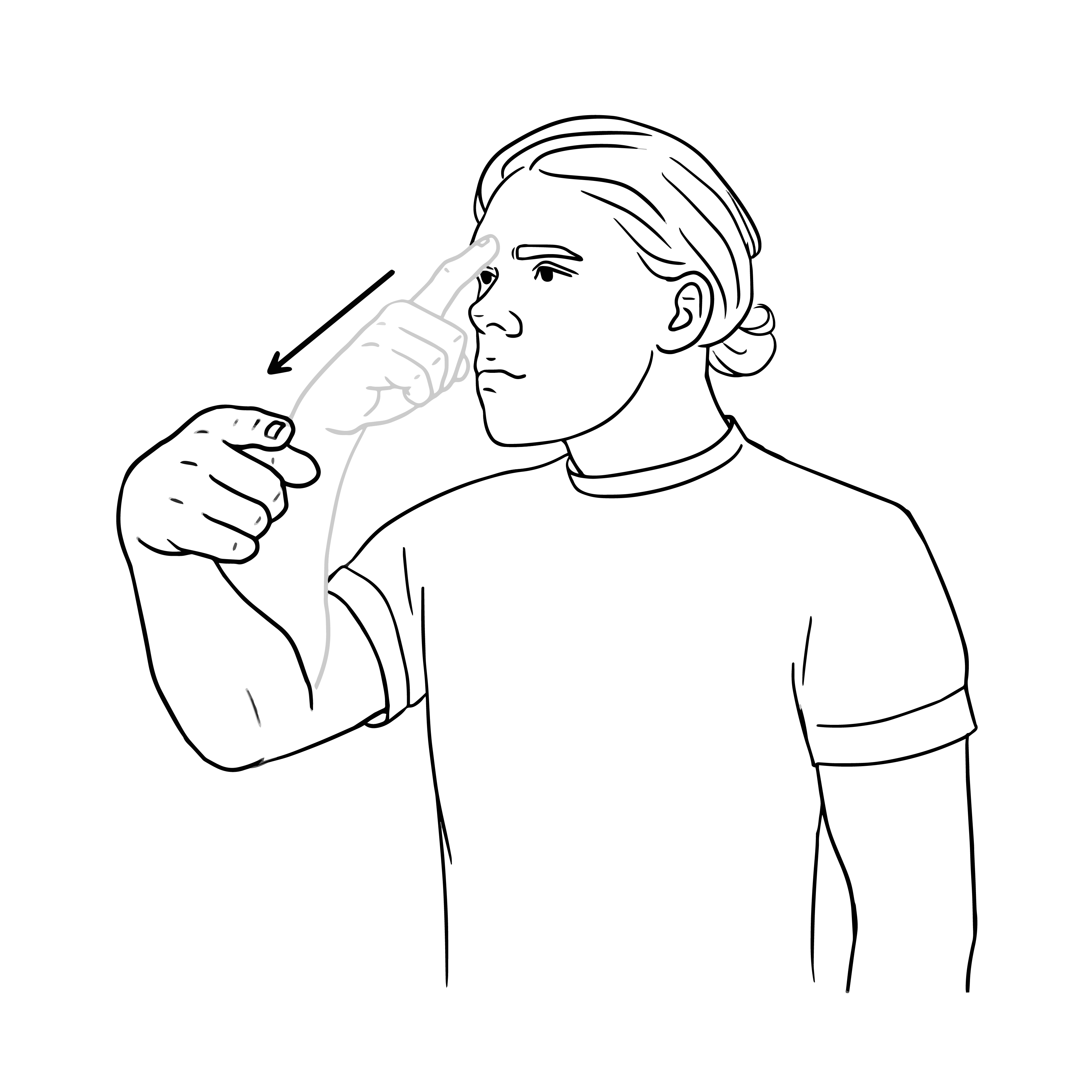
Hand in the “1” handshape, palm edgewise away from the signer, fingertip tilted to the left from the signer’s perspective. At the beginning of the sign, the index finger is positioned on the forehead between the eyebrows. The movement goes diagonally downward; during the movement, the palm turns slightly away from the signer. In the final position, the hand is opposite the center of the chest.

Hand in the “1” handshape, palm facing down. At the beginning of the sign, the fingertip is positioned at the signer’s right temple. The movement goes diagonally downward. In the final position, the fingertip is at the right clavicle or shoulder area.
The main driving force of a sailing yacht. Sails work thanks to the wind, turning its energy into the movement of the vessel. Sails differ in shape, purpose, and position, and each of them performs its own task. Knowing their design, location, and how they are used helps a sailor handle the boat efficiently on different points of sail.


Hand in the “5” handshape, palm edgewise away from the signer. The hand is positioned in front of the face, to the right of the cheek. A repeated rotating movement is made, turning the palm toward and away from the signer.
The sail located closer to the stern. It is attached by its luff to the mast, by its foot to the boom, and has battens along the leech. It is controlled by the mainsheet and hoisted with the main halyard.

At the beginning of the sign, the hand is in the “Г” handshape, palm edgewise away from the signer. The index finger is positioned on the forehead, and the thumb is near the tip of the nose. The movement goes diagonally forward and downward, while the index finger and thumb close together. In the final position, the hand is opposite the chin.
The forward sail, attached to the forestay by its luff. Used when sailing to windward.
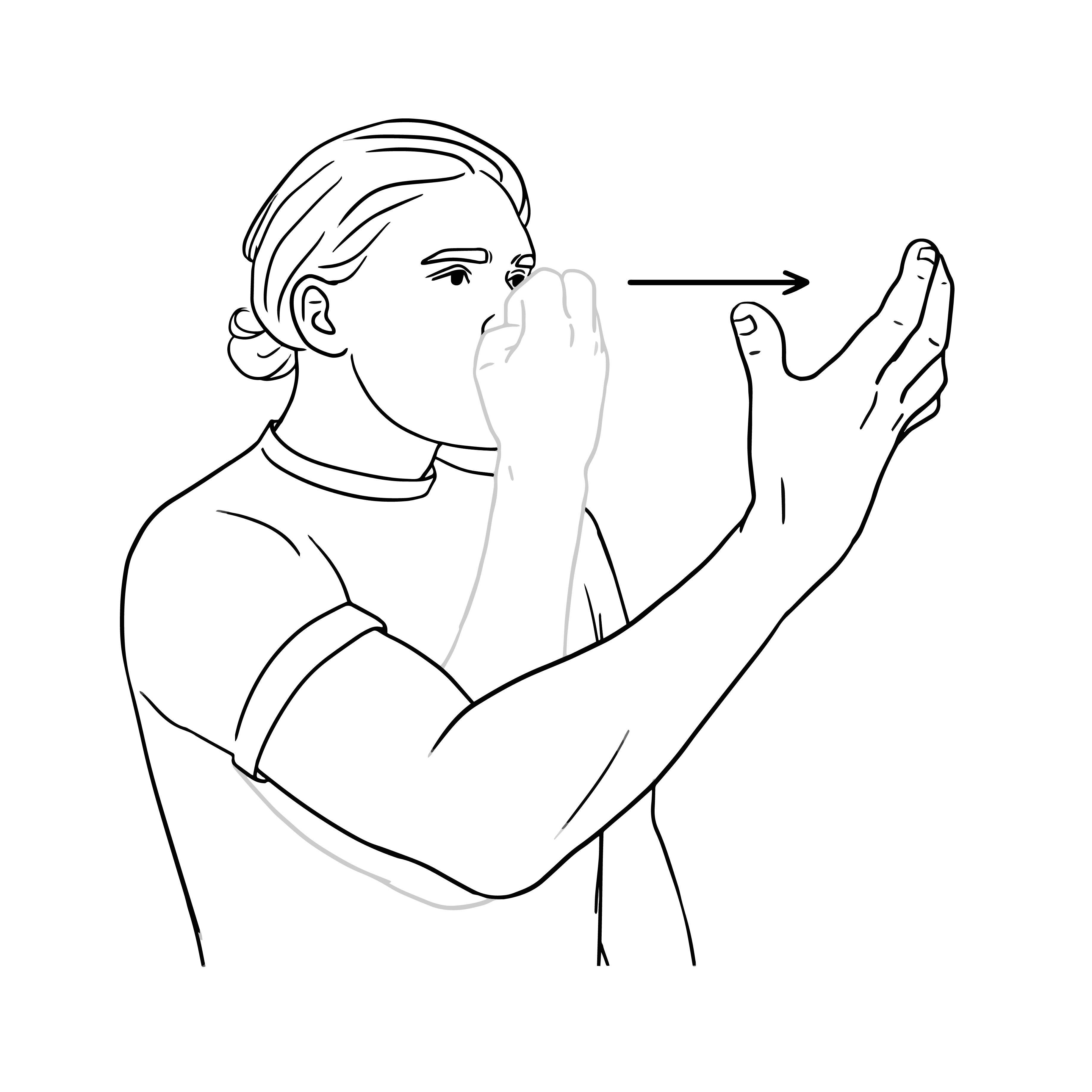
At the beginning of the sign, the hand is in the “Е” handshape, palm facing the signer. The fingertips are placed on the tip of the nose. The hand moves forward and opens into the “500” handshape.
A large asymmetric sail used only on off-wind courses.

FRONT: Hand in the “1” handshape, palm turned to the signer’s left. At the beginning, the tip of the index finger points upward and is placed opposite the nose. The finger moves forward in an arc in the vertical plane. In the final position, the hand is in front of the center of the chest, with the fingertip pointing away from the signer. LUFF EDGE: Hand in the “Ф” handshape, palm turned edgewise away from the signer, with the hand opposite the signer’s eye level. The movement goes downward in an arc. In the final position, the palm is turned toward the signer and the hand is opposite the stomach.
The front edge of the sail, running from the tack to the head. It is attached to the mast or the forestay.

REAR: The fingers are clenched into a fist except for the thumb, which is extended. The palm is turned to the left and the thumb points upward. The hand is placed at the right side of the torso. The movement goes backward toward the signer. In the final position, the thumb points backward and the hand is above the shoulder. LEECH EDGE: Hand in the “Ф” handshape, palm turned toward the signer, fingertips turned diagonally to the left. The hand is placed opposite the right side of the head. The movement goes downward in the vertical plane. In the final position, the hand is opposite the right side of the chest and the fingertips point to the left.
The rear edge of the sail, running from the head to the clew.

LOWER: Hand in the “В” handshape. Palm turned away from the signer, fingertips turned diagonally upward. At the beginning, the hand is opposite the face. The movement goes downward in the vertical plane. In the final position, the palm is turned downward and the hand is opposite the lower right part of the chest. FOOT EDGE: Hand in the “В” handshape. Palm turned downward, fingertips turned diagonally to the left. The hand is opposite the left part of the chest. The movement goes from left to right, ending with the hand at the right side of the torso and the fingertips pointing straight away from the signer.
The lower edge of the sail, running from the tack to the clew.

Hand in the “У” handshape, with the straight thumb pressed to the lower phalanx of the index finger. At the beginning of the sign, the hand is positioned in front of the face, palm toward the signer. The movement goes diagonally downward, with the hand moving toward the waist.
A line that changes the tension of the sail edge. It is a thin rope sewn into the edge of the sail.
The name of a specific corner is built from the signs corner + sail. This section gathers the main corners of a sail and the elements associated with them.


Hand in the “В” handshape, palm facing down. The hand is positioned above the signer’s head, with the fingertips pointing to the left. A repeated forward-and-back movement is made in the horizontal plane.
The upper corner of the sail. The sail is hoisted along the mast by this corner with the help of the halyard.

Hand in the “Г” handshape, palm turned to the signer’s left. At the beginning of the sign, the hand is positioned with the thumb in front of the signer’s chin. The movement goes diagonally toward the face. In the final position, the thumb is in front of the signer’s nose.
The corner of the sail fastened near the base of the mast, the forestay, or a bowsprit or yard. It is the sail corner that is always forward, toward the bow. Through it, the tension of the luff can be adjusted.

At the beginning of the sign, the hand is in the “5” handshape, with the straight thumb slightly moved toward the center of the palm. The palm is turned toward the signer, with the fingertips pointing diagonally up to the left in the vertical plane. The hand is placed at the left side of the chest. The movement goes diagonally downward and the hand closes into the “Ж” handshape. In the final position, the hand is slightly to the right of the signer’s waist.
The corner of the sail to which the sheets are attached. It is used to control the sail.
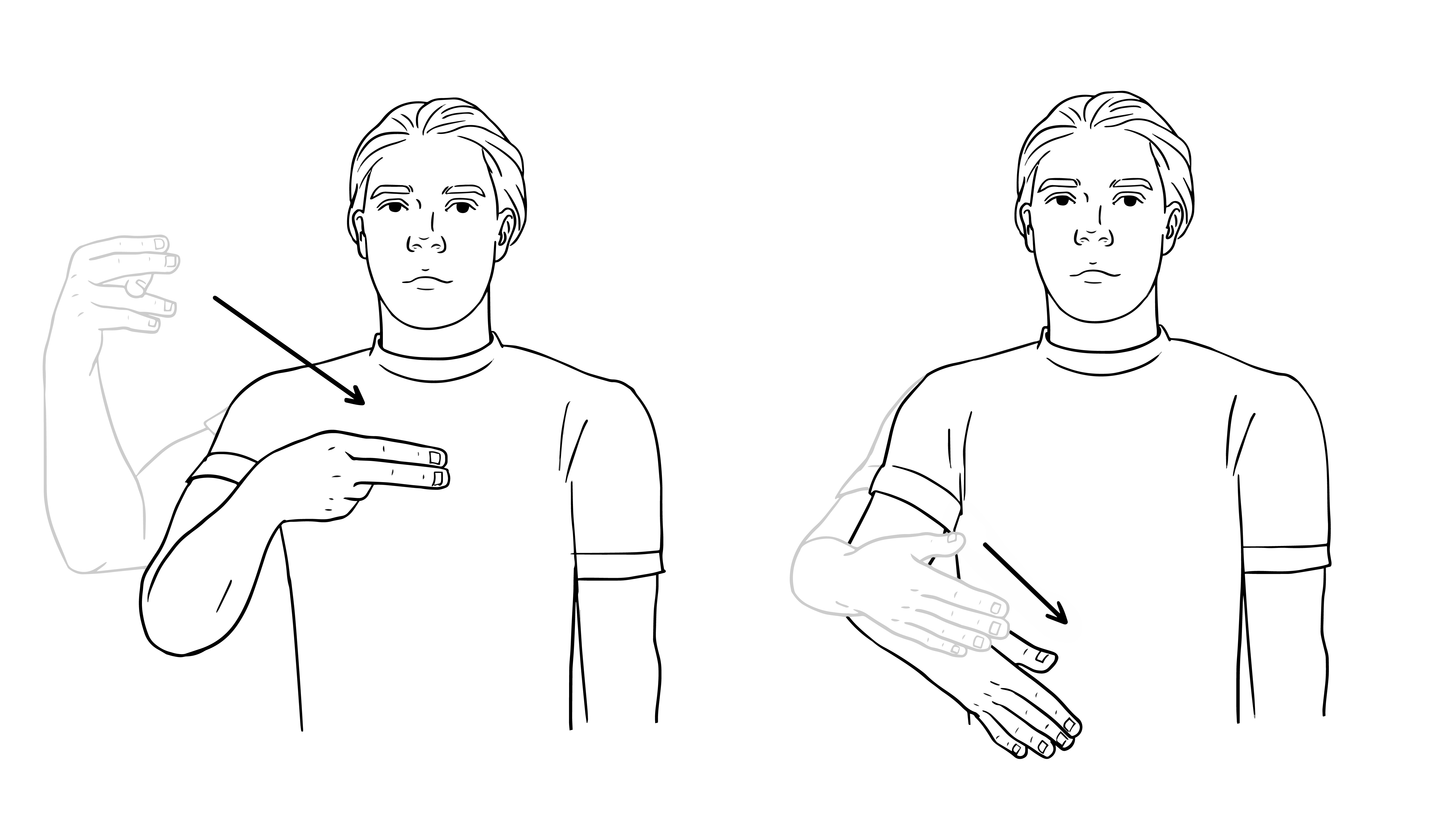
Hand in the “П” handshape, palm turned toward the signer, fingertips pointing to the left. The hand is positioned to the right side of the head. It moves diagonally downward in a plane parallel to the signer’s torso, shifting toward the center of the chest. Then the handshape changes to “В”. The hand moves slightly away from the torso horizontally. After that, the movement continues diagonally downward in a plane parallel to the signer, with the hand shifting toward stomach level.
A pocket in the sail for placing battens. Battens are stiff supports that reinforce the sail and help it keep its shape.
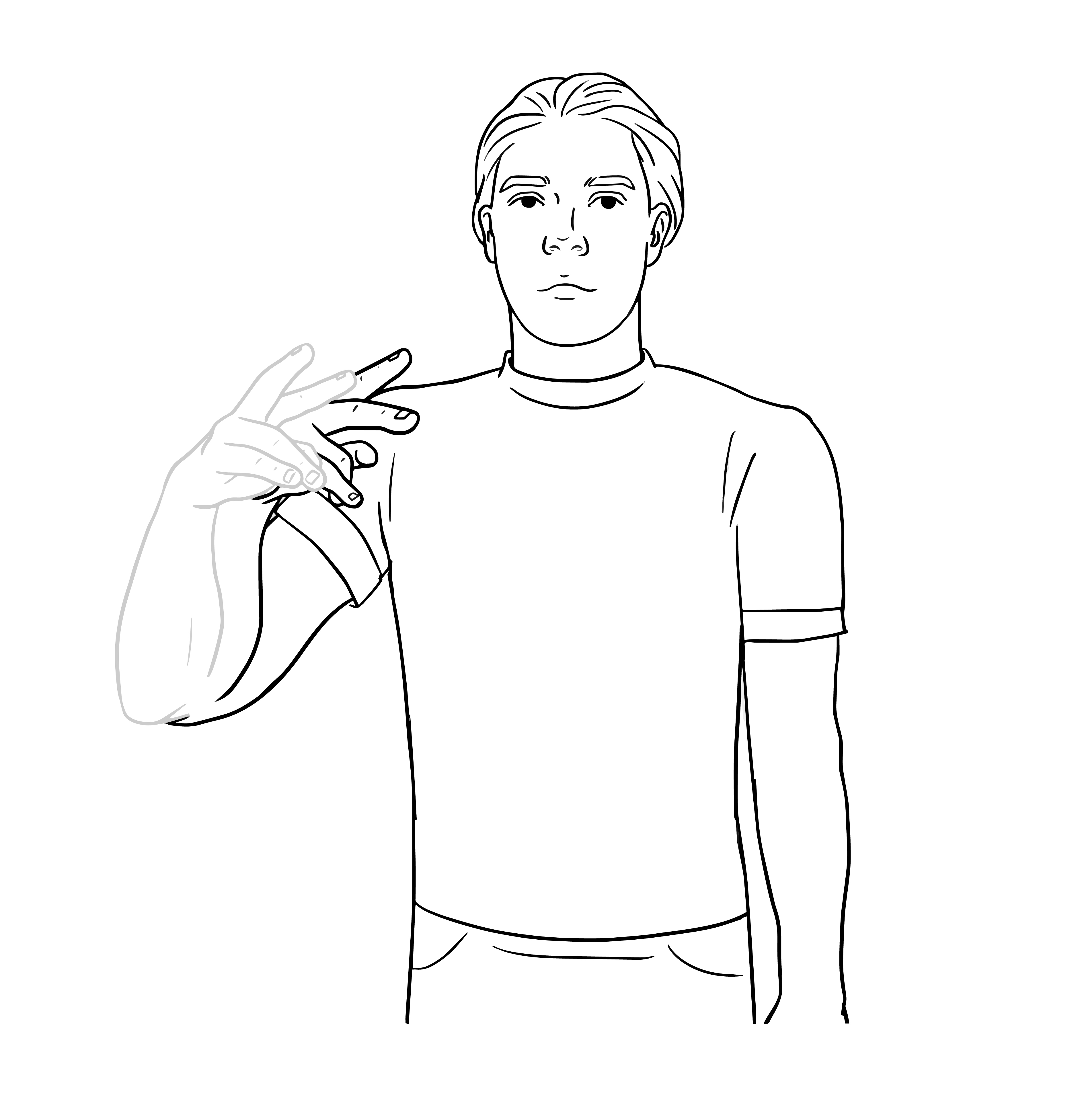
Hand in the “5” handshape, fingers slightly spread. Palm turned downward. The hand is positioned above the signer’s right shoulder. A small swaying movement is made with the hand.
A wind indicator. It can be fixed on sails, where it helps visually assess the airflow over the sail.

Hand in the “Б” handshape. Palm turned downward. The hand is positioned opposite the signer’s waist. The hand is pulled toward the body with a short movement.
A line that changes the tension of the sail edge. It is a thin rope sewn into the edge of the sail.
This is the system of lines used to control the sails and spars. It allows the position and shape of the sails to be changed.
The terms for the running rigging lines are built from the signs for the attachment point of the line (sail corner or spar) + the name of the line (sheet, downhaul, halyard).

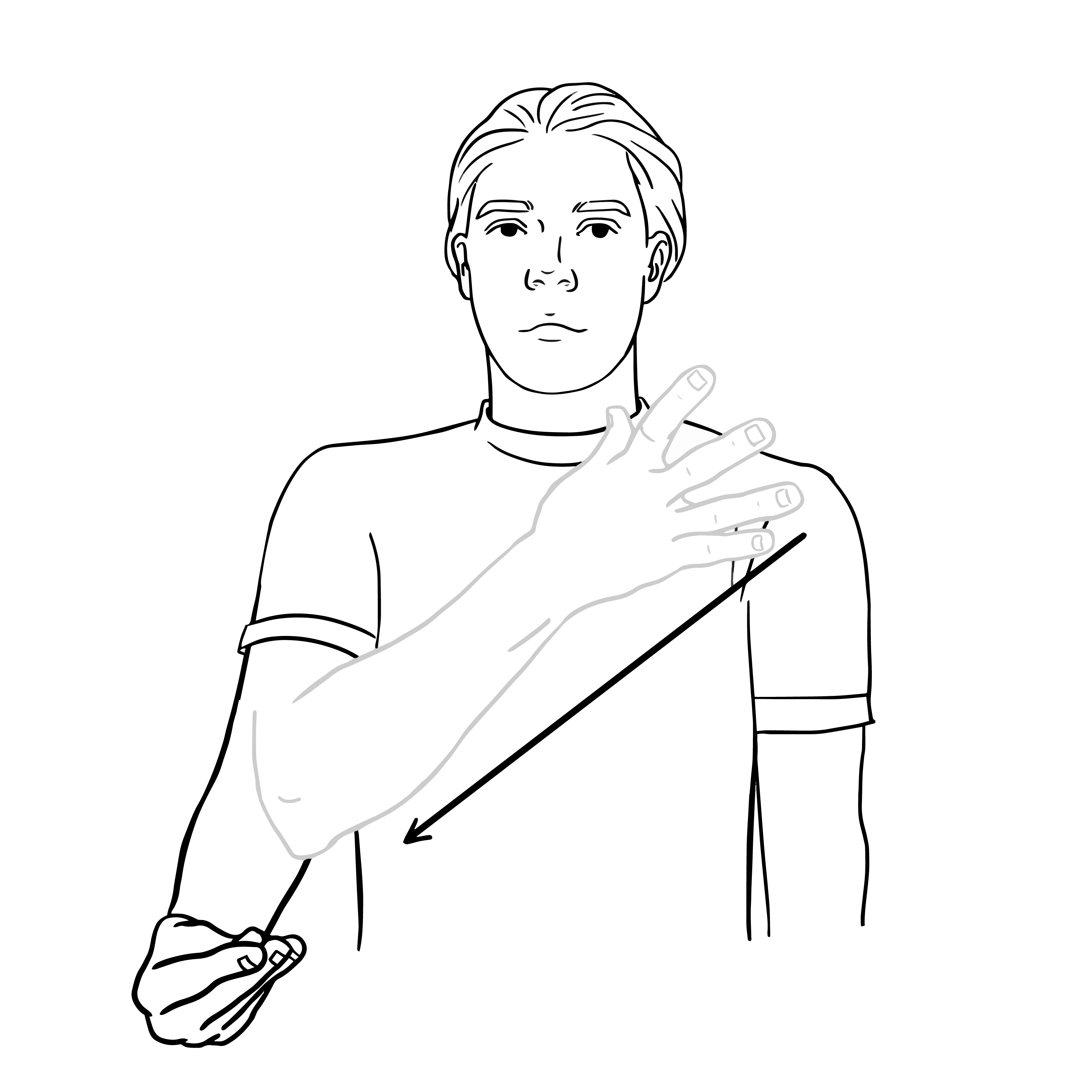
At the beginning of the sign, the hand is in the “5” handshape, with the straight thumb slightly moved toward the center of the palm. The palm is turned toward the signer, with the fingertips pointing diagonally up to the left in the vertical plane. The hand is placed at the left side of the chest.
A rope used to control a sail.

The fingers are clenched into a fist except for the thumb, which is extended. The palm is turned toward the signer and the thumb points upward. The hand is placed in front of the right side of the chest. The movement goes upward in the vertical plane. In the final position, the hand is at the forehead.
A rope used to hoist and secure sails.

Hand in the “1” handshape. Palm facing up, fingertip pointing away from the signer. The hand is placed in front of the center of the chest. The movement goes toward the signer in a straight line, and the index finger bends into the “Х” handshape.
A control line that regulates the tension of the sail edge.
JIB: At the beginning of the sign, the hand is in the “Г” handshape, palm edgewise away from the signer. The index finger is positioned on the forehead, and the thumb is near the tip of the nose. The movement goes diagonally forward and downward, while the index finger and thumb close together. In the final position, the hand is opposite the chin. SHEET: At the beginning of the sign, the hand is in the “5” handshape, with the straight thumb slightly moved toward the center of the palm. The palm is turned toward the signer, with the fingertips pointing diagonally up to the left in the vertical plane. The hand is placed at the left side of the chest.
The sheet that controls the position of the jib.
BOOM: Hand in the “С” handshape, palm facing away from the signer, positioned near the left shoulder. Horizontal movement from left to right, with the fingertips continuously pointing away from the signer. In the final position, the hand is near the right shoulder. SHEET: At the beginning of the sign, the hand is in the “5” handshape, with the straight thumb slightly moved toward the center of the palm. The palm is turned toward the signer, with the fingertips pointing diagonally up to the left in the vertical plane. The hand is placed at the left side of the chest.
The sheet that controls the position of the mainsail.
GENNAKER: At the beginning of the sign, the hand is in the “Е” handshape, palm facing the signer. The fingertips are placed on the tip of the nose. The movement goes forward and the hand opens into the “500” handshape. SHEET: At the beginning of the sign, the hand is in the “5” handshape, with the straight thumb slightly moved toward the center of the palm. The palm is turned toward the signer, with the fingertips pointing diagonally up to the left in the vertical plane. The hand is placed at the left side of the chest.
The sheet that controls the position of the gennaker.
JIB: At the beginning of the sign, the hand is in the “Г” handshape, palm edgewise away from the signer. The index finger is positioned on the forehead, and the thumb is near the tip of the nose. The movement goes diagonally forward and downward, while the index finger and thumb close together. In the final position, the hand is opposite the chin. HALYARD: The fingers are clenched into a fist except for the thumb, which is extended. The palm is turned toward the signer and the thumb points upward. The hand is placed in front of the right side of the chest. The movement goes upward in the vertical plane. In the final position, the hand is at the forehead.
The halyard that hoists the jib.
MAINSAIL: Hand in the “5” handshape, palm edgewise away from the signer. The hand is positioned in front of the face, to the right of the cheek. A repeated rotating movement is made, turning the palm toward and away from the signer. HALYARD: The fingers are clenched into a fist except for the thumb, which is extended. The palm is turned toward the signer and the thumb points upward. The hand is placed in front of the right side of the chest. The movement goes upward in the vertical plane. In the final position, the hand is at the forehead.
The halyard that hoists the mainsail.
GENNAKER: At the beginning of the sign, the hand is in the “Е” handshape, palm facing the signer. The fingertips are placed on the tip of the nose. The hand moves forward and opens into the “500” handshape. HALYARD: The fingers are clenched into a fist except for the thumb, which is extended. The palm is turned toward the signer and the thumb points upward. The hand is placed in front of the right side of the chest. The movement goes upward in the vertical plane. In the final position, the hand is at the forehead.
The halyard that hoists the gennaker.
BOOM: Hand in the “С” handshape, palm facing away from the signer, positioned near the left shoulder. Horizontal movement from left to right, with the fingertips continuously pointing away from the signer. In the final position, the hand is near the right shoulder. DOWNHAUL: Hand in the “1” handshape. Palm facing up, fingertip pointing away from the signer. The hand is in front of the center of the chest. The movement comes straight toward the signer and the index finger bends into the “Х” handshape.
A control line for regulating the tension of the mainsail leech. It pulls the boom vertically downward.
DOWNHAUL: Hand in the “1” handshape. Palm facing up, fingertip pointing away from the signer. The hand is in front of the center of the chest. The movement comes straight toward the signer and the index finger bends into the “Х” handshape. TACK CORNER: Hand in the “Г” handshape, palm turned to the signer’s left. At the beginning of the sign, the hand is positioned with the thumb in front of the signer’s chin. The movement goes diagonally toward the face. In the final position, the thumb is in front of the signer’s nose.
A control line used to adjust the tension of the tack area of the sail. It pulls the corner vertically downward.
MAINSAIL: Hand in the “5” handshape, palm edgewise away from the signer. The hand is positioned in front of the face, to the right of the cheek. A repeated rotating movement is made, turning the palm toward and away from the signer. SHEET: At the beginning of the sign, the hand is in the “5” handshape, with the straight thumb slightly moved toward the center of the palm. The palm is turned toward the signer, with the fingertips pointing diagonally up to the left in the vertical plane. The hand is placed at the left side of the chest.

A cable stretched between the masthead and the stern.
Knots on a yacht are needed to fasten, join, and quickly secure ropes in many situations: mooring, sail trim, securing equipment, and working with rigging. Knowing the basic knots is part of core safety and practice in sailing.

The index finger is bent in the joints, the straight thumb is closed against it, and the other fingers are gathered. The palm is turned away from the signer and the thumb points upward. At the beginning of the sign, the hand is placed in front of the center of the chest. The hand rotates in a semicircular movement at the joint. The palm then turns toward the signer, the thumb points to the left, and the hand moves from left to right in the horizontal plane. In the final position, the hand is at the right side of the chest.
Actions aimed at making a knot.

At the beginning, the hand is in the “А” handshape. The palm is turned edgewise away from the signer. The hand is placed at the center of the chest. The movement goes diagonally to the right in the horizontal plane, and the hand opens into the “5” handshape, palm down. In the final position, the hand is opposite the right side of the chest.
Actions aimed at undoing a knot.

Hand in the “3” handshape. At the beginning, the palm is turned away from the signer and the hand is placed opposite the lower right side of the chest. The hand bends downward at the wrist. In the final position, the palm is turned down and the fingertips point forward. The movement is repeated twice.
A knot used to prevent a rope from slipping out of a block.

First sign: Hand in the “3” handshape. At the beginning, the palm is turned away from the signer and the hand is placed opposite the lower right side of the chest. The hand bends downward at the wrist. In the final position, the palm is turned down and the fingertips point forward. The movement is repeated twice. Second sign: Hand in the “2” handshape.
A type of figure-eight knot that forms a fixed loop. It is used to create strong attachment points on ropes that do not damage the material and are easy to untie. It is often used for securing lines or connecting a rope to a carabiner.

Hand in the “1” handshape, palm turned edgewise away from the signer. At the beginning, the tip of the index finger points upward and is positioned opposite the chin. The finger moves forward in an arc. In the final position, the hand is in front of the center of the chest and the fingertip points away from the signer.
A knot used to join the two ends of the same rope.

The index finger and thumb touch with their pads, and the other fingers are extended. At the beginning, the palm faces the signer and the hand is opposite the shoulder. The movement goes in an arc away from the signer in the horizontal plane. In the final position, the palm is turned away from the signer and the hand is opposite the shoulder.
A quick-release knot used to shorten the sail temporarily.

Hand in the “Х” handshape, palm turned toward the signer. The index finger is placed on the chin. The fingertip taps the chin.
A knot used to make a non-tightening loop.
These are the pieces of yacht equipment that guide, secure, and hold lines in place and make it possible to work with the rigging safely and efficiently on board. They include blocks, stoppers, cleats, carabiners, shackles, and other details without which proper sail trim and boat handling are impossible.

Hand in the “О” handshape. At the beginning, the hand is turned with the palm away from the signer and positioned opposite the shoulder. The hand bends downward at the wrist. In the final position, the palm is turned down and the hand is opposite the upper right part of the chest. The movement is repeated twice.
A pulley device with a grooved wheel.

First sign: Hand in the “О” handshape. At the beginning, the hand is turned with the palm away from the signer and positioned opposite the shoulder. The hand bends downward at the wrist. In the final position, the palm is turned down and the hand is opposite the upper right part of the chest. The movement is repeated twice. Second sign: Hand in the “3” handshape. At the beginning, the palm is turned away from the signer and the hand is positioned opposite the lower right side of the chest. The hand bends downward at the wrist. In the final position, the palm is turned down and the fingertips point forward. The movement is repeated twice.
A block with two sheaves.

First sign: Hand in the “О” handshape. At the beginning, the hand is turned with the palm away from the signer and positioned opposite the shoulder. The hand bends downward at the wrist. In the final position, the palm is turned down and the hand is opposite the upper right part of the chest. The movement is repeated twice. Second sign: Hand in the “2” handshape.

Hand in the “Е” handshape. Palm directed to the left, edgewise away from the signer. At the beginning, the hand is opposite the right eyebrow. The hand bends downward at the wrist in an arc in the vertical plane. In the final position, the palm is turned down and the hand is opposite the right eye. The movement is repeated twice.
A mechanism with two spring-loaded jaws between which a rope is secured.

At the beginning of the sign, the hand is in the “С” handshape, palm facing up. The hand is positioned opposite the lower right part of the chest. The fingers close into the “Е” handshape.
A toothed mechanism used to hold a rope.

Hand in the “В” handshape, thumb turned toward the center of the palm. Palm turned away from the signer. The hand is positioned at the nose. The fingers close into the “Ж” handshape. The movement is repeated twice.
A fitting on deck for securing ropes.
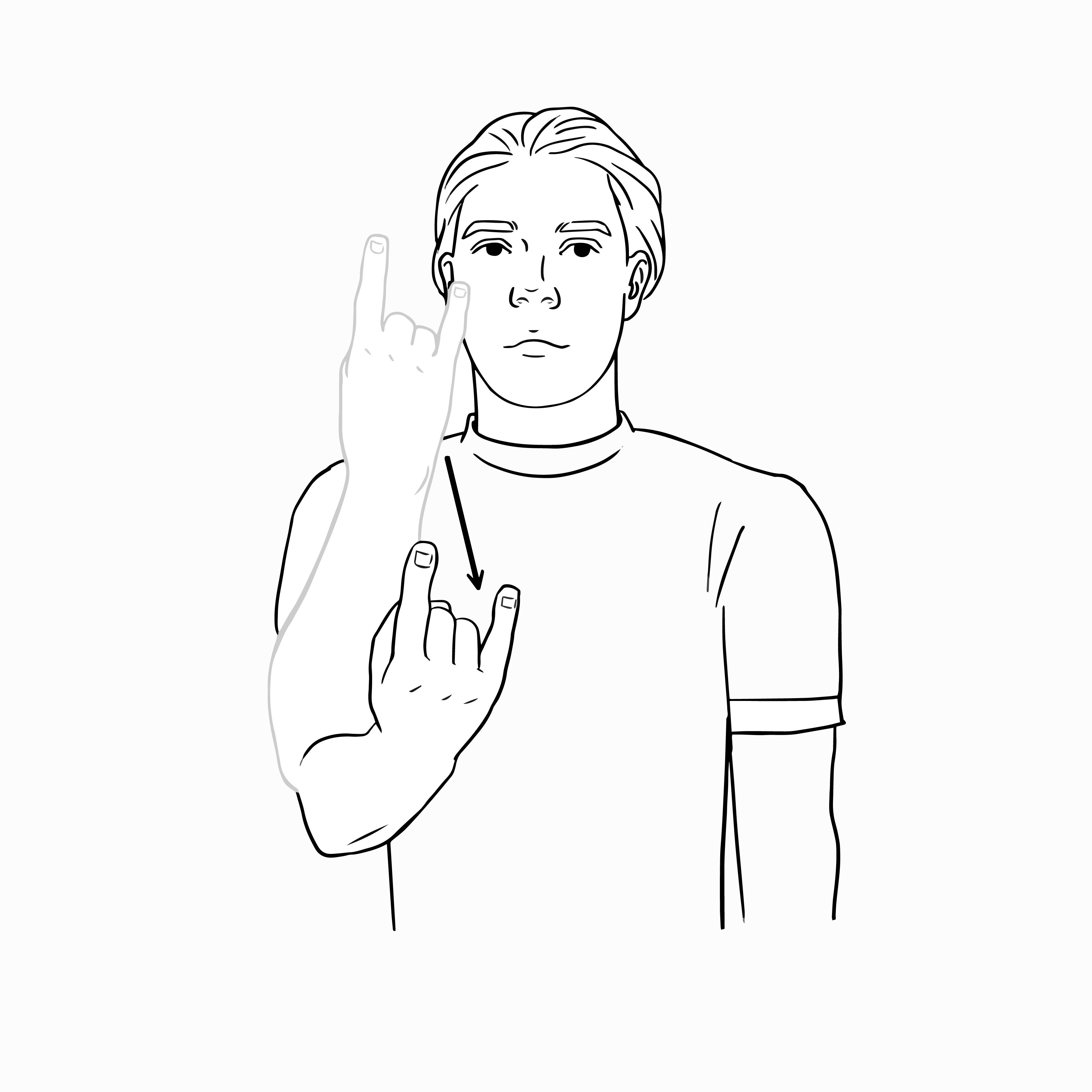
Hand in the “Ы” handshape. The forearm is raised vertically. The palm is turned toward the signer, and the hand is positioned to the right of the head. The movement goes downward, with the hand moving to the lower right side of the chest.
A double post used for securing lines on a vessel or at a dock.
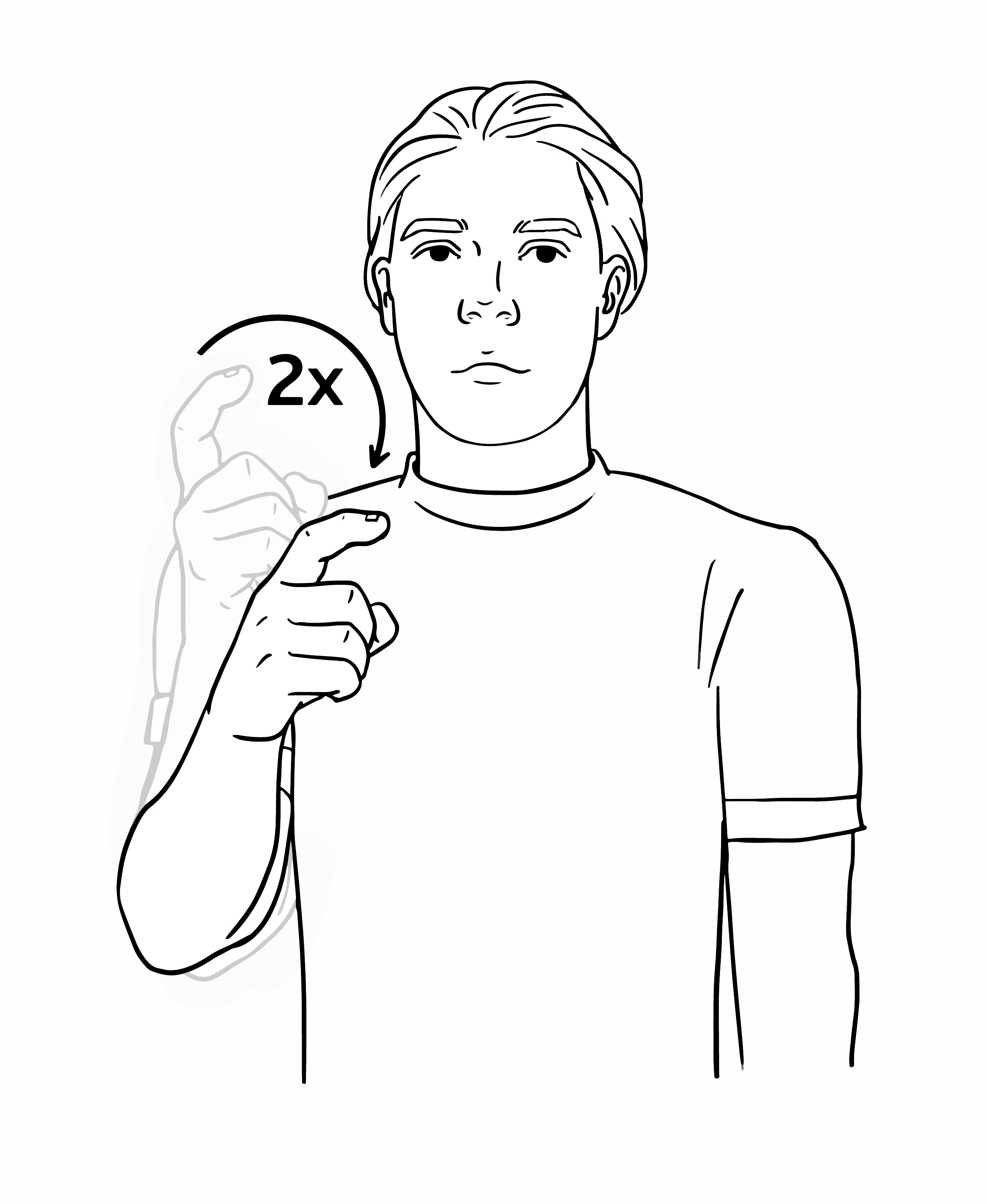
Hand in the “Х” handshape. At the beginning, the palm is turned to the signer’s left and the hand is positioned to the right of the head. The hand bends downward at the wrist in the vertical plane. In the final position, the palm is turned down and the hand is opposite the upper right part of the chest. The movement is repeated twice.
A metal connector with a spring-loaded gate.

At the beginning, three fingers are extended and spread, while the thumb and index finger are bent and do not touch. The palm is turned edgewise to the left from the signer’s perspective, and the thumb and index finger are near the earlobe. The thumb and index finger then close on the right earlobe while the other fingers remain spread. In the final position, the hand forms the “О” handshape on the earlobe. The movement is repeated twice.
A U-shaped connector with a closing pin or split pin used for temporarily joining rigging parts.

The fingers are clenched into a fist, the thumb is stuck out and points upward, and the palm faces the signer. The hand is at waist level a short distance from the torso. In a horizontal movement, the hand presses toward the signer’s side. The movement is repeated twice.
A protective element placed along the side to prevent damage.
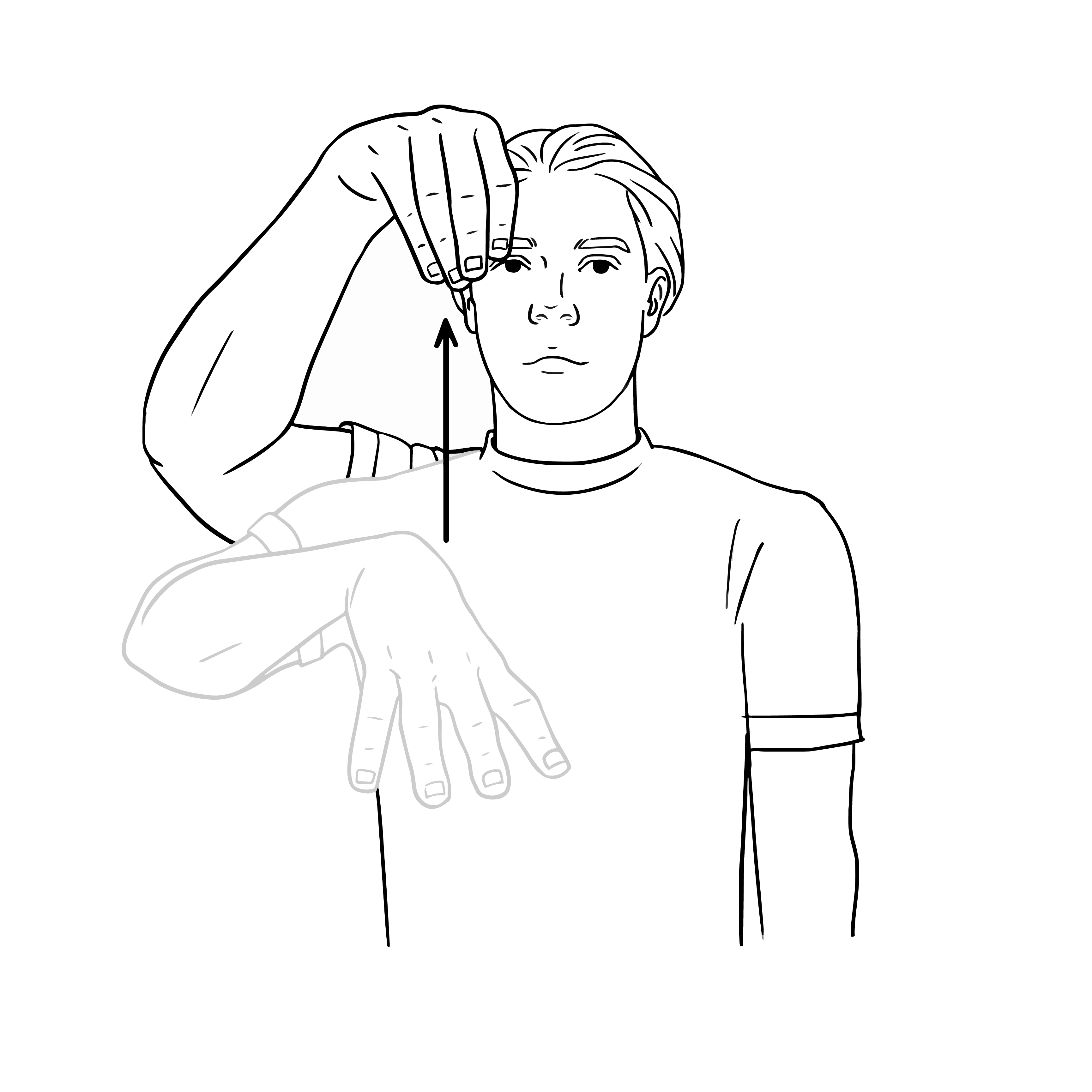
At the beginning of the sign, the hand is in the “5” handshape, with the straight thumb slightly moved toward the center of the palm. The palm is turned toward the signer and the fingertips point downward. At the start, the hand is placed in front of the right side of the signer’s waist. The hand moves vertically upward, and the fingers close into the “Ж” handshape. In the final position, the hand is at head level.
A floating mark used to indicate a route or warn of danger.
Commands on a yacht are needed for clear and rapid interaction between crew members while sailing, maneuvering, and working with the sails. They help everyone act in a coordinated way, improve safety on board, and make it possible to control the yacht accurately without unnecessary confusion.
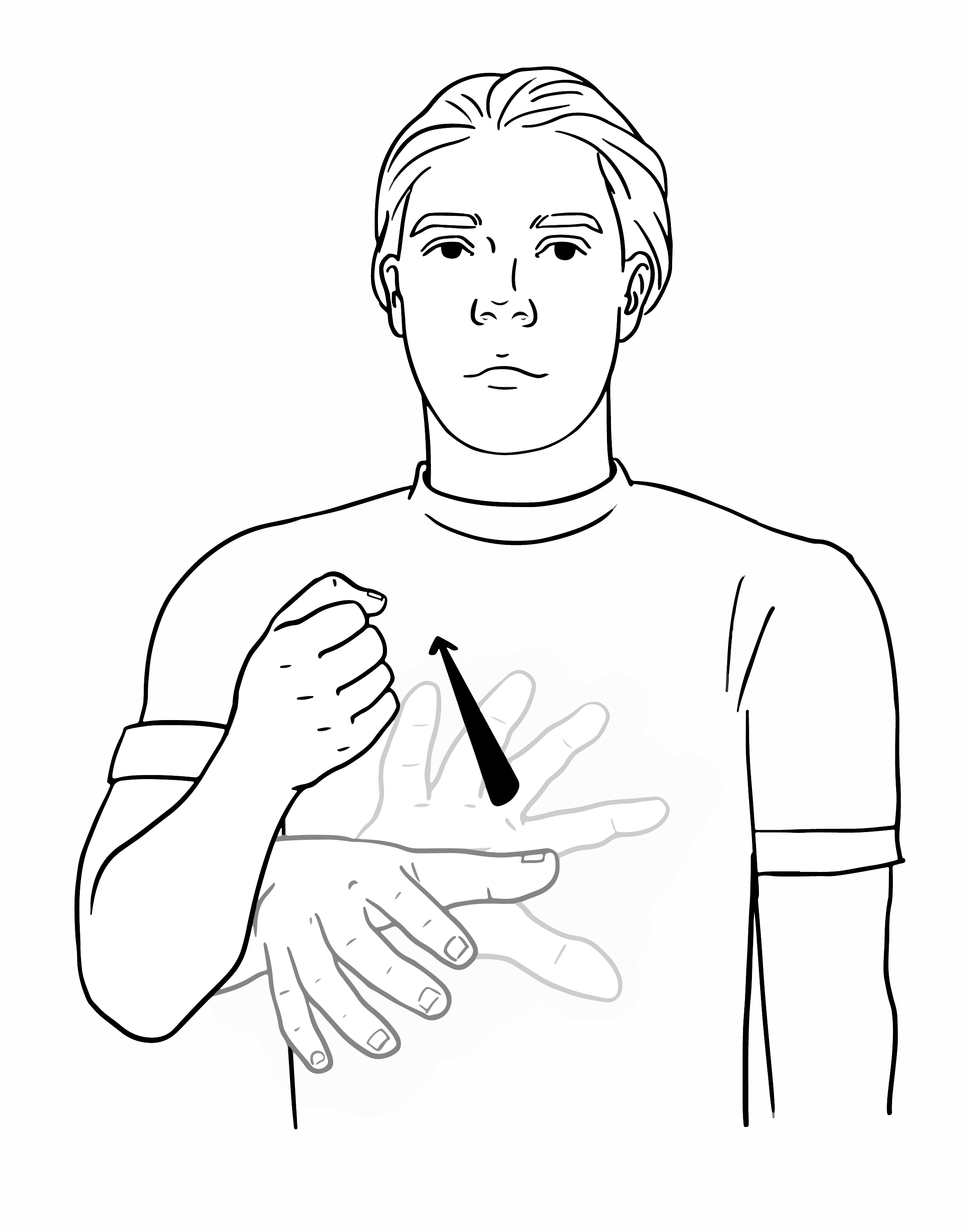
Hand in the “500” handshape. Palm turned away from the signer. The hand is placed opposite the center of the chest. The movement comes toward the signer, the hand bends downward at the joint, and the hand closes. In the final position, the hand is in the “А” handshape, palm toward the signer, and is placed at the upper right side of the chest.
Haul in: pull a line to increase tension.

The index finger is bent at the first two joints, the straight thumb touches it, and the other fingers are gathered. The palm faces up and the tip of the thumb points forward. The hand is opposite the lower right side of the chest. It moves forward, the fingers open slightly and then close again. Then the hand moves forward once more and opens fully, with the fingers slightly bent.
Ease: slacken a line to reduce tension.
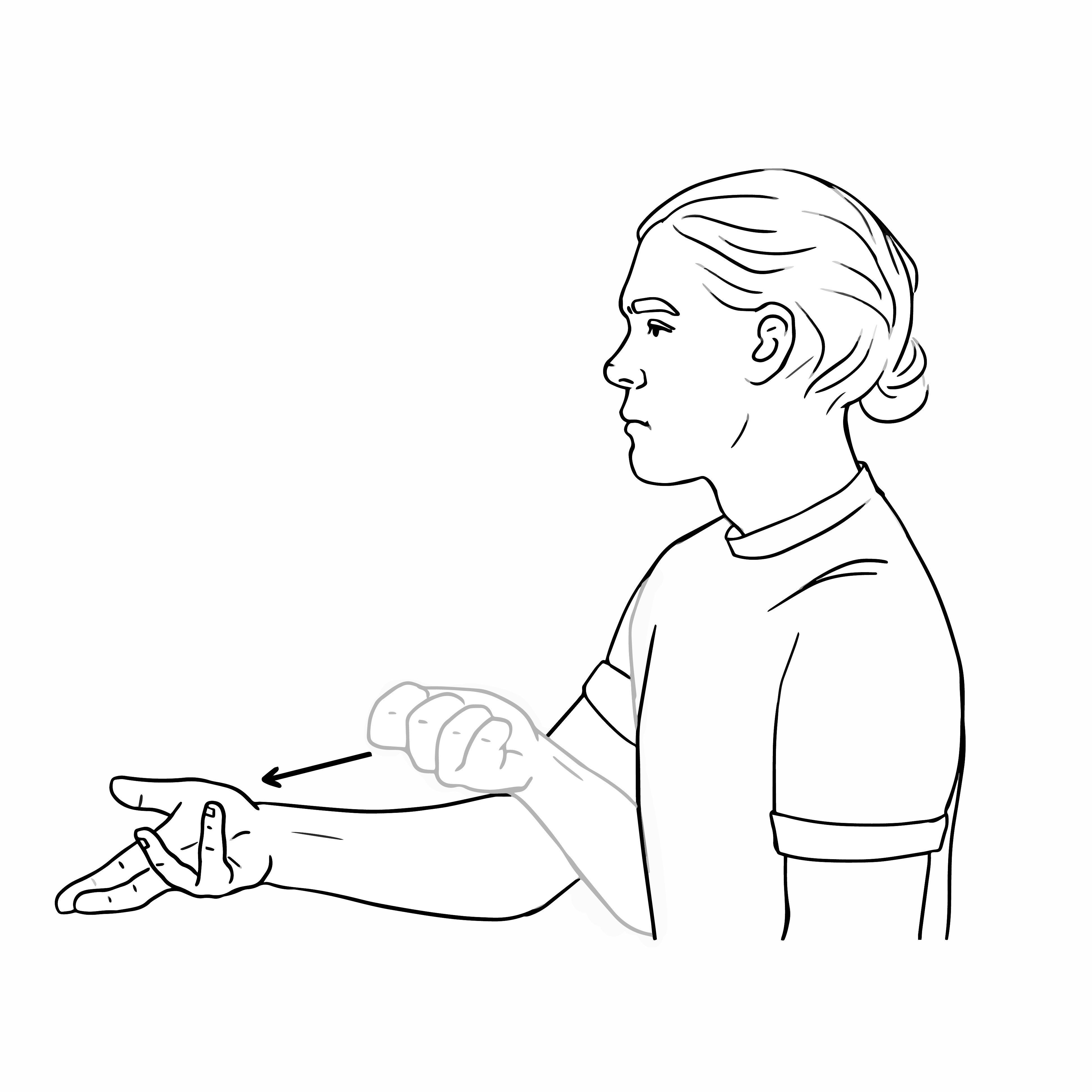
The index finger is bent at the first two joints, the straight thumb touches it, and the other fingers are gathered. The palm faces up and the tip of the thumb points forward. The hand is opposite the lower right side of the chest. It moves diagonally downward, and the hand opens fully with the fingers slightly bent. In the final position, the hand is opposite the right side of the waist.
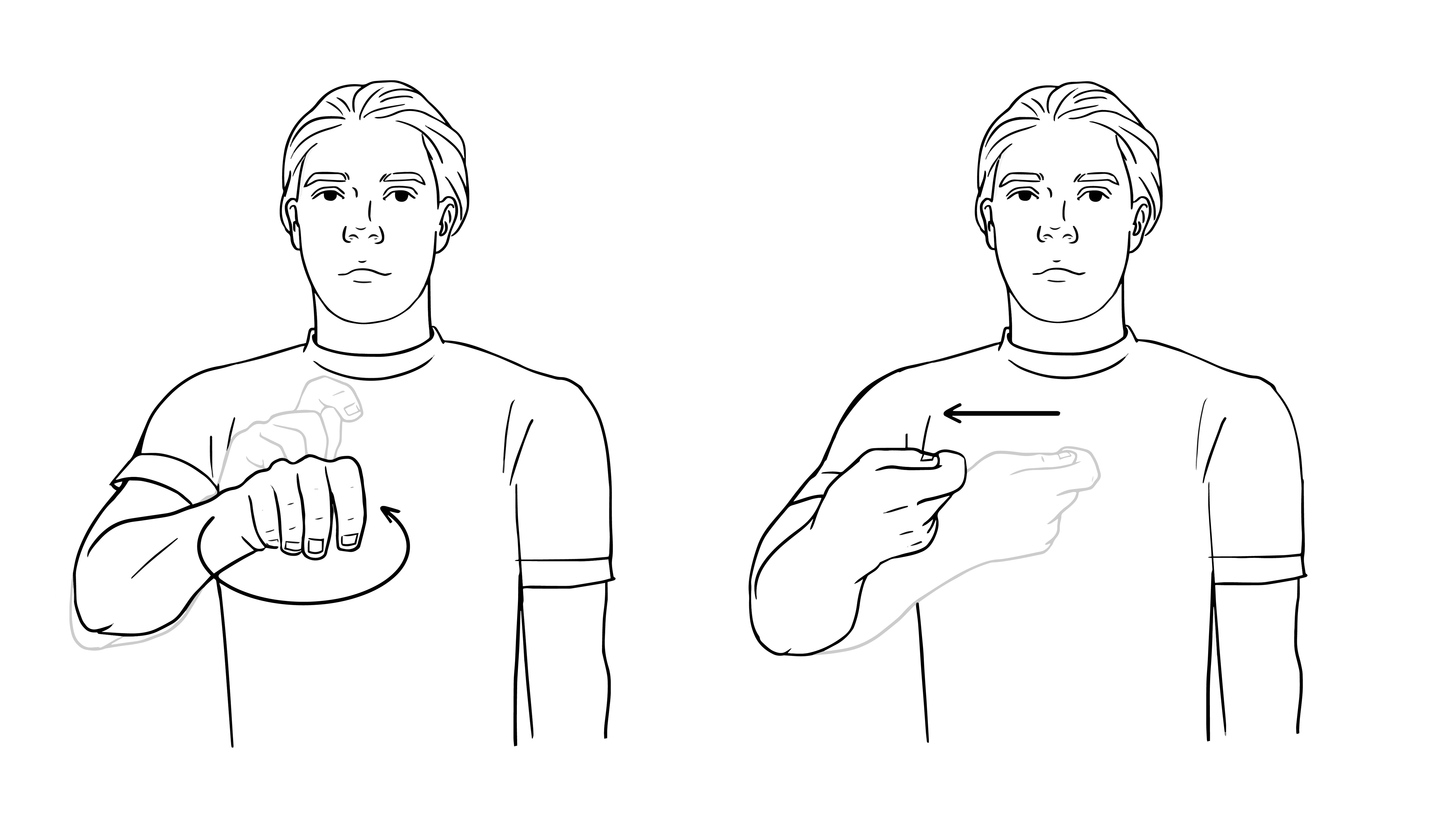
The index finger is bent in the joints, the straight thumb is closed against it, and the other fingers are gathered. The palm is turned away from the signer and the thumb points upward. At the beginning of the sign, the hand is placed opposite the center of the chest. The hand rotates in a semicircular movement at the joint. The palm then turns toward the signer, the thumb points to the left, and the movement continues from left to right in the horizontal plane. In the final position, the hand is at the right side of the chest.
Tie: actions aimed at making a knot.

At the beginning, the hand is in the “А” handshape. The palm is turned edgewise away from the signer. The hand is placed at the center of the chest. The movement goes diagonally to the right in the horizontal plane and the hand opens into the “5” handshape. In the final position, the hand is opposite the right side of the chest.
Untie: actions aimed at loosening a knot.

The fingers are clenched into a fist except for the thumb, which is extended. The palm is turned toward the signer and the thumb points upward. The hand is opposite the lower right side of the chest. The movement goes upward in the vertical plane. In the final position, the hand is opposite the right shoulder.

Hand in the “П” handshape. Palm turned toward the signer, fingertips pointing to the left. The hand is positioned in front of the center of the chest. The fingertips move away from the signer in an arc in the horizontal plane. In the final position, the hand is to the right of the torso at chest level, palm away from the signer, fingertips pointing to the right.
Head up: reduce the angle between the yacht’s course and the true wind; bring the bow closer to the wind line.

Hand in the “У” handshape. Palm turned away from the signer, little finger pointing to the right. The hand is positioned to the right of the torso at chest level. The tip of the little finger moves toward the signer in an arc in the horizontal plane. In the final position, the hand is in front of the center of the chest, palm toward the signer.

Hand in the “1” handshape. The forearm is vertical slightly to the side of the torso. The tip of the index finger makes a rotational movement around the vertical axis from right to left.
A maneuver in which the boat crosses the wind line either with the bow or with the stern.

Hand in the “2” handshape. Palm turned edgewise away from the signer, with the tip of the index finger touching the tip of the nose. The hand then moves forward in the vertical plane. The movement is broken, and the hand is led slightly downward in an arc.
An imaginary line from which a yacht can approach a mark without making additional turns, at the optimal speed for the given conditions.
A yacht crew is a well-coordinated mechanism in which each team member performs a specific onboard role, balancing intellectual and physical work. In the limited space of a yacht, the crew distributes strength, attention, and responsibility in order to solve the tasks of boat handling, adaptation to changing conditions, and interaction with opponents efficiently.
In professional racing, the distribution of roles often depends on the abilities and skills of each crew member. Some focus on tactics and weather analysis, while others are responsible for handling the lines and performing maneuvers. The crew gathers as much information as possible about the environment, the water area, and opponents in order to make optimal decisions and work as a single coordinated whole.

Hand in the “А” handshape. Palm turned downward, the hand positioned at the side of the waist. Repeated forward-and-back movement of the hand in the horizontal plane.
A crew member who controls the yacht’s course and speed.

At the beginning of the sign, the hand is in the “5” handshape, with the straight thumb slightly moved toward the center of the palm. The palm is turned toward the signer, with the fingertips pointing diagonally up to the left in the vertical plane. The hand is placed at the left side of the chest. The movement goes diagonally downward and the hand closes into the “Ж” handshape. In the final position, the hand is slightly to the right of the signer’s waist.
Responsible for controlling the sheets, changing the angle of the sails to the wind, and adjusting their tension for maximum yacht speed.
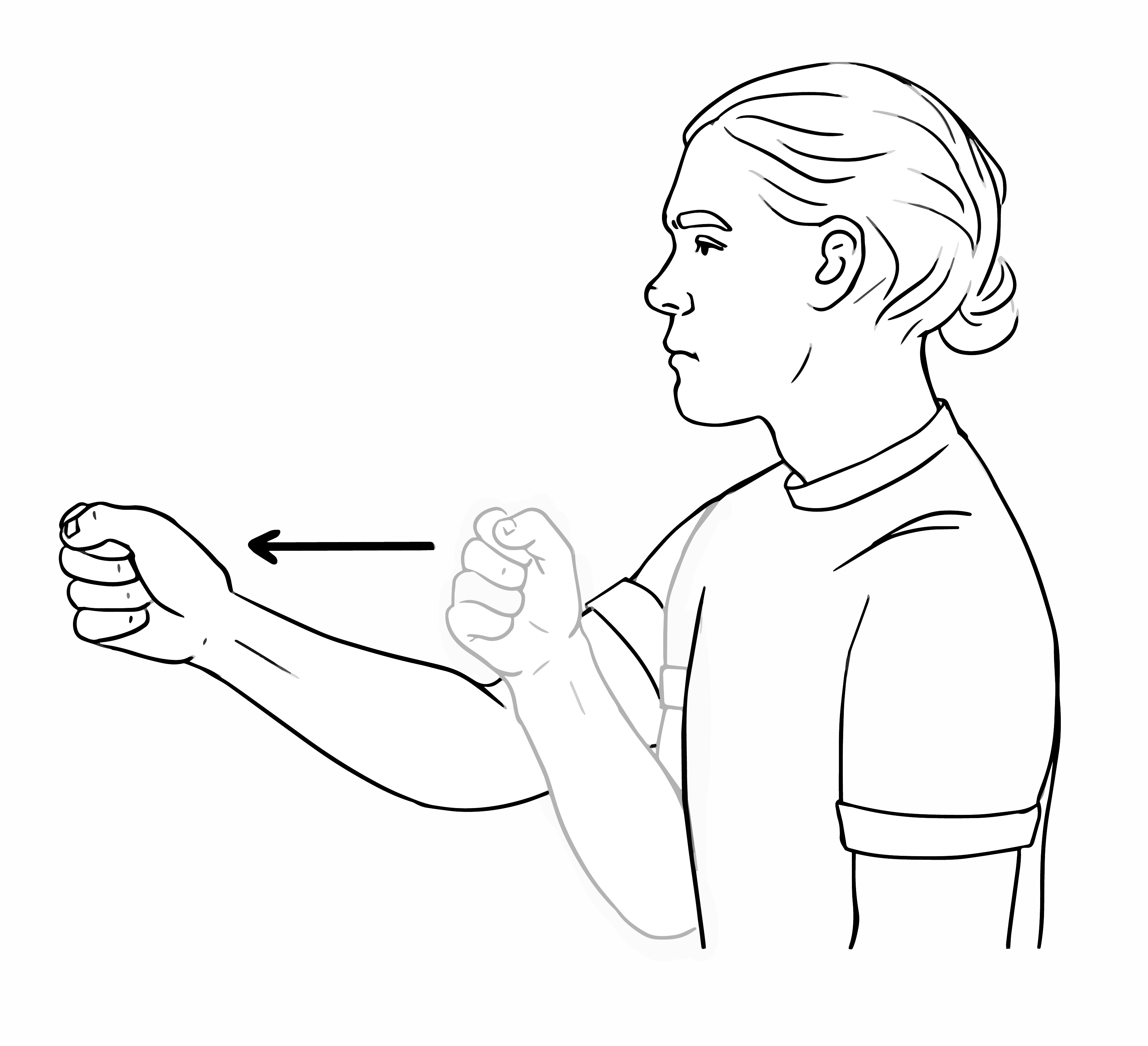
Hand in the “А” handshape. Palm turned downward, the hand positioned to the right of the chest. The movement goes forward, away from the signer.
Works at the bow of the yacht and helps with setting and taking down sails.

Both hands in the “Ф” handshape, palms toward the signer. The hands are in front of the torso at chest level. Alternating forward-and-back movements of the hands are made in the horizontal plane.
A yacht competition consisting of a series of races.
This is the direction of the yacht’s movement relative to the wind. Understanding points of sail helps a sailor choose the best route and tactics while taking into account wind strength and direction. Each point of sail has its own specific sail trim and boat handling features.
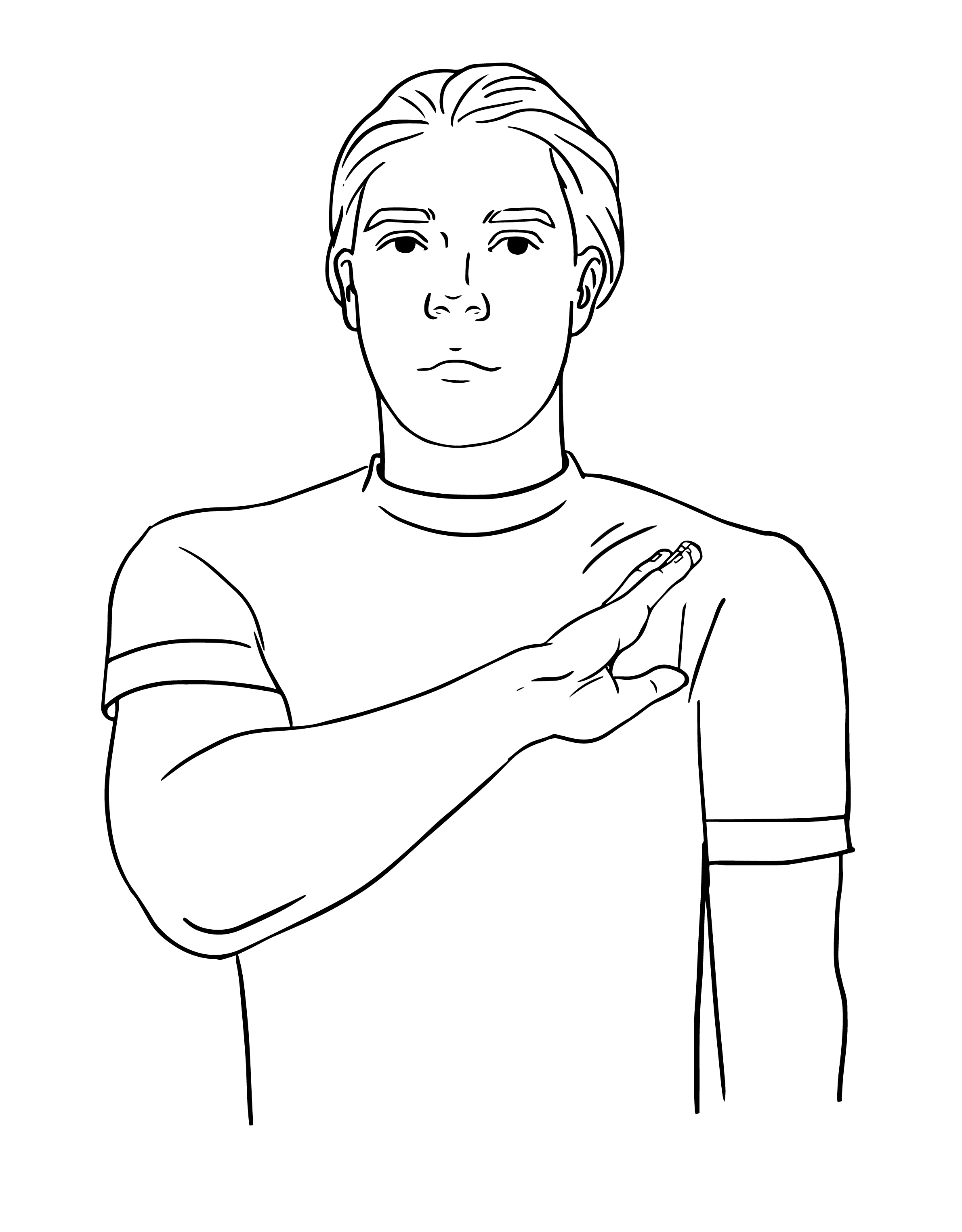
Hand in the “В” handshape, thumb moved toward the center of the palm. Palm turned edgewise away from the signer, fingertips pointing diagonally. The hand is placed on the left side of the chest.
The position of the yacht relative to the wind in which the wind blows directly from ahead, into the bow.
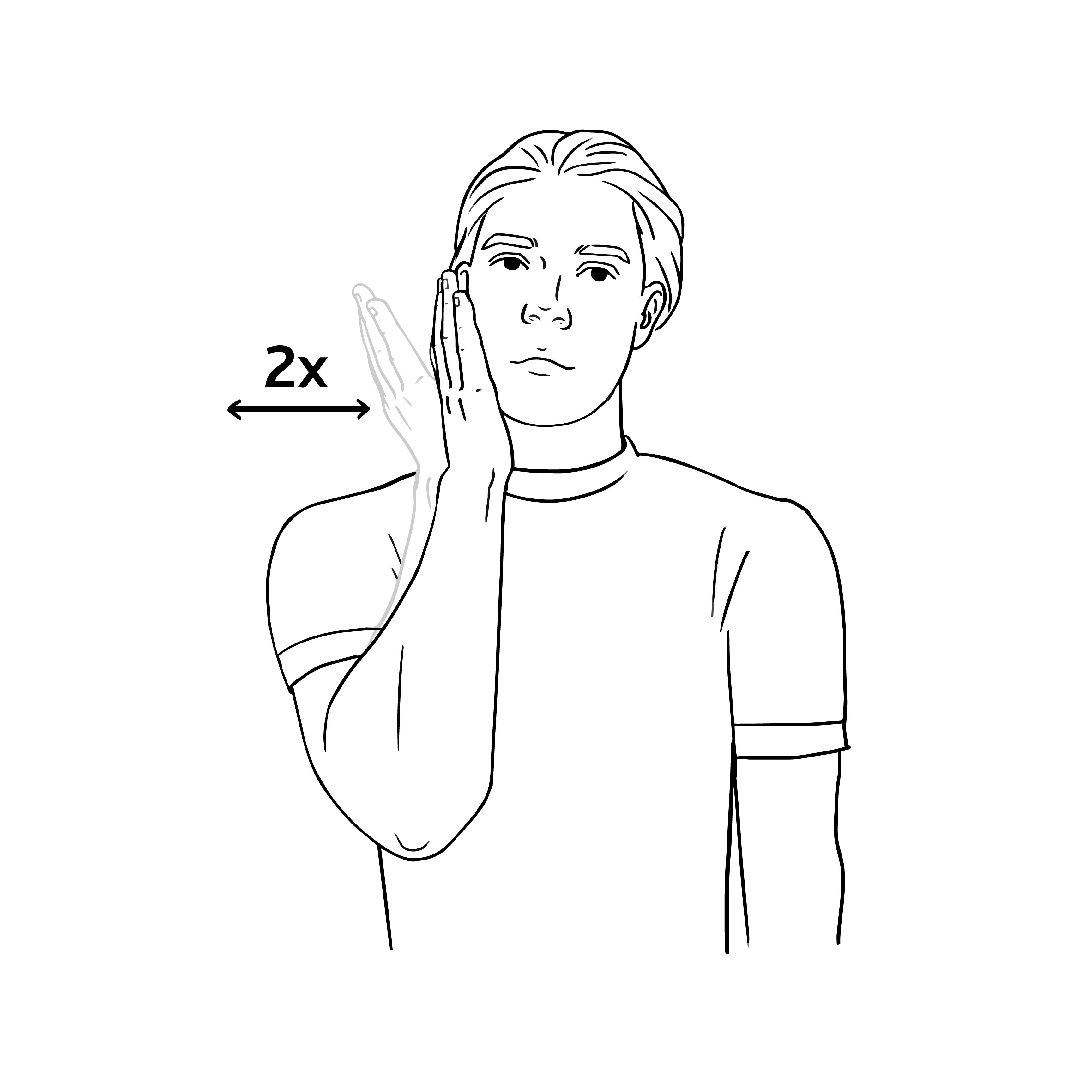
Hand in the “В” handshape, palm turned edgewise away from the signer. The hand is positioned near the right cheek. A repeated patting movement is made with the fingers against the right cheek.
A point of sail in which the boat moves at a sharp angle to the wind, roughly 30 to 45 degrees.
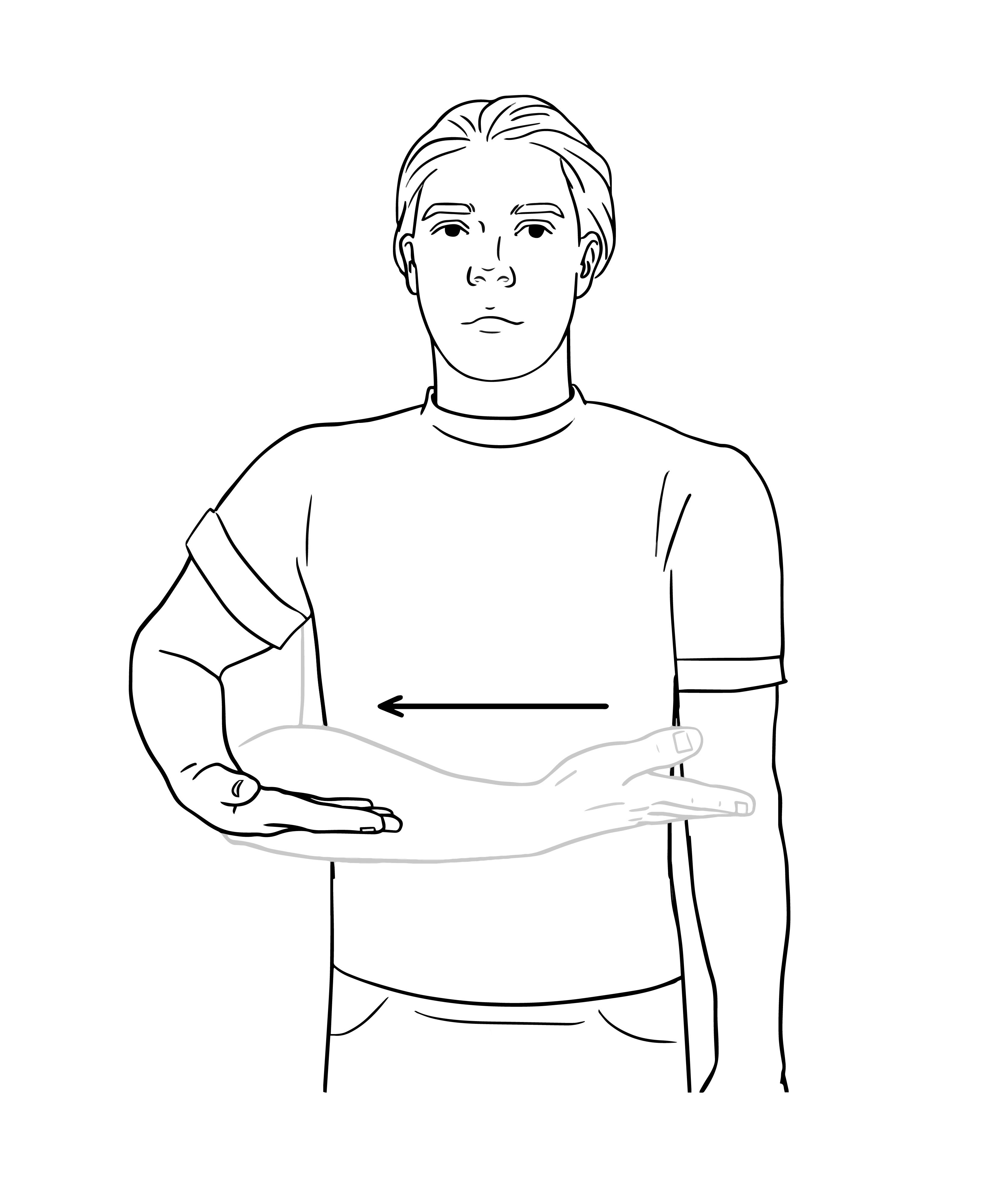
Hand in the “В” handshape, palm turned upward, edgewise toward the signer. At the beginning, the hand is placed on the left side of the stomach. The movement goes from left to right in the horizontal plane. In the final position, the hand is on the right side of the stomach.
A point of sail in which the wind blows perpendicular to the side of the yacht, at 90 degrees.

Hand in the “5” handshape, palm turned toward the signer, fingertips pointing to the left from the signer’s perspective. The hand is placed at the center of the stomach. A repeated patting movement is made on the stomach.
A point of sail in which the boat moves at an obtuse angle to the wind, roughly 110 to 160 degrees.
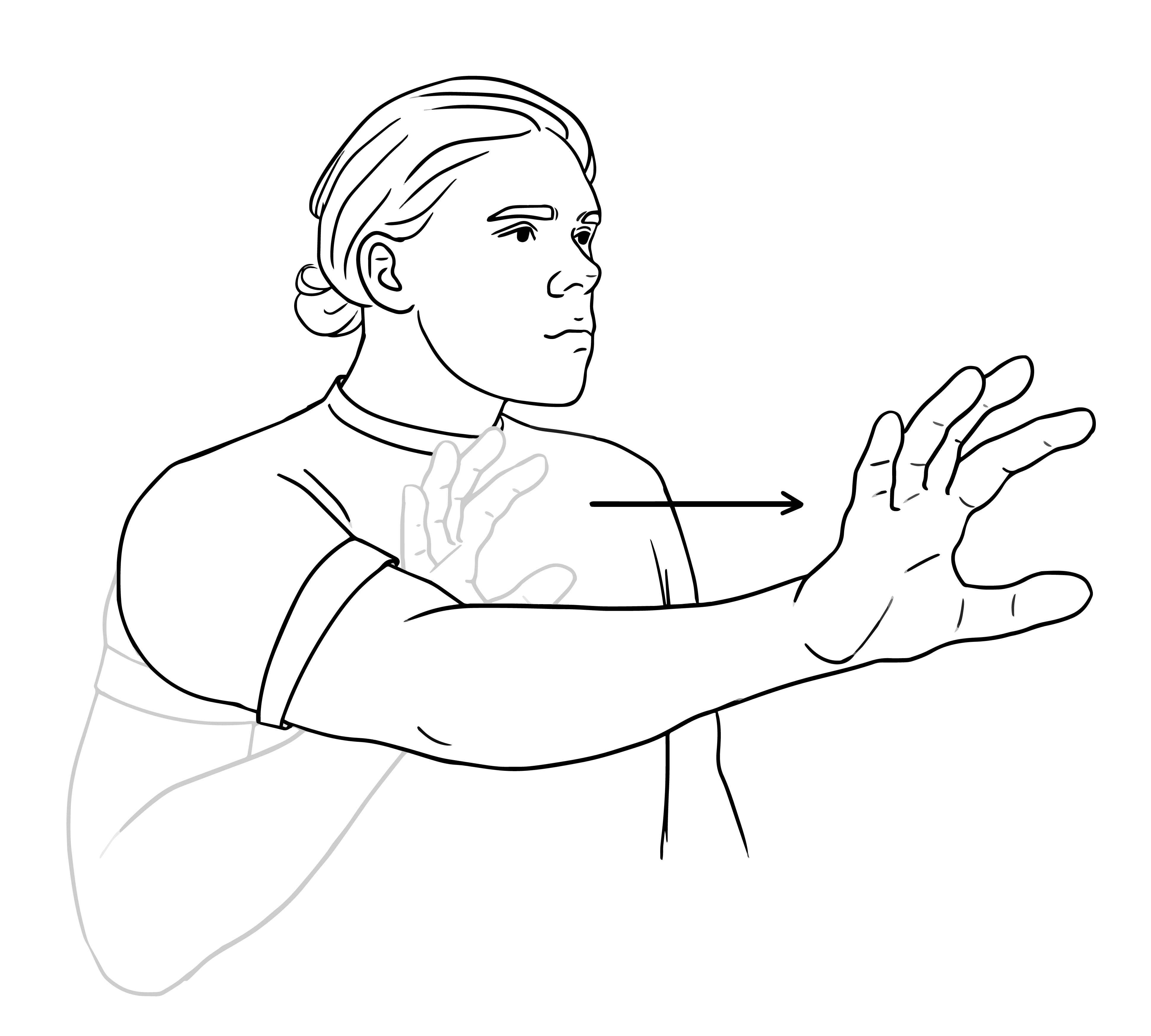
Hand in the “500” handshape. Palm turned away from the signer. The hand is placed near the right side of the chest. The movement goes forward.
A point of sail in which the wind blows directly onto the stern, at 180 degrees.
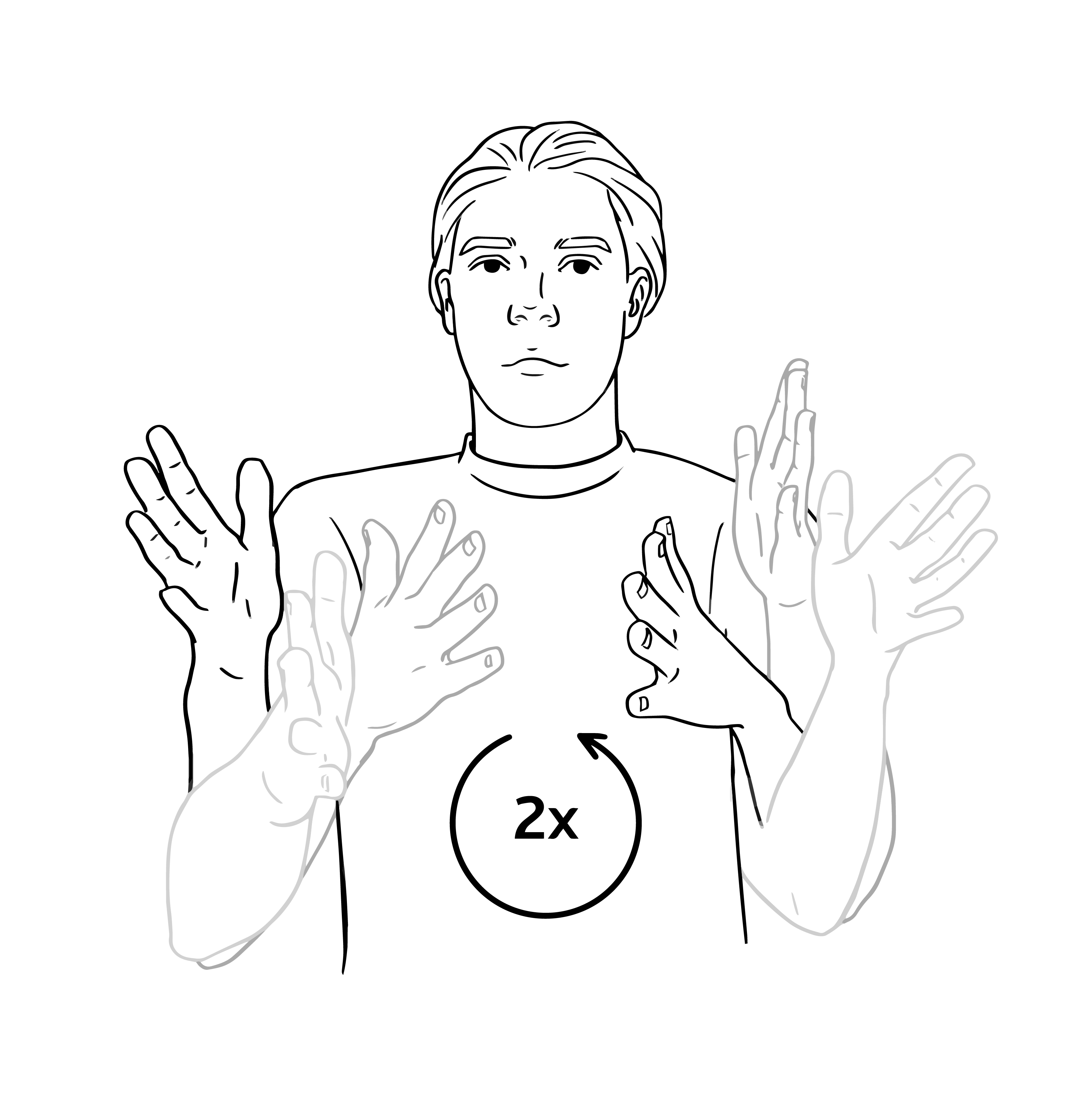
Both hands in the “5” handshape. The palms face each other and the fingertips point away from the signer. The hands move simultaneously in a circular motion from left to right in the vertical plane.
A flow of air moving near the earth’s surface. It is customary to distinguish true wind, apparent wind, and course wind.